
Bank statement verification
Last updated: 2026-08-18
When a loan, a lease or a high-value sale rests on a bank statement, the question is not whether the PDF looks right — it is whether the file was altered after the bank issued it. Bank statement verification answers that question with evidence from inside the document, not a glance at its surface.
What bank statement verification means
Verification has two layers. The first checks the story: does the income match the deposits, does the account holder match the applicant. The second checks the document: was this specific file generated by the bank's systems and left untouched, or was it edited, rebuilt or generated outside the bank. We do the second layer — document forensics — because a forged file makes every check of the story meaningless.
How our verification works
- Metadata and software fingerprints: which tool produced the file, and whether an editor re-saved it after issue.
- Internal structure: incremental-update layers, object history and traces of rebuilt or generated content.
- Balance arithmetic: opening balance plus credits minus debits must reconcile across every transaction.
- Fonts and layout: pasted-in figures betray themselves in typeface, weight and baseline.
- Digital signatures and cross-checks: whether a signature covers the whole file and still holds, and whether the IBAN checksum, the dates and the amounts written in words agree with the figures.
Who verifies statements with us
Self-serve or API
What you receive
A structured report: an overall verdict with a risk score, each signal that fired with its evidence, and the metadata record — suitable for attaching to a loan file or dispute as an audit record. If the document is clean, the report says exactly which checks it passed and what those checks can and cannot prove.
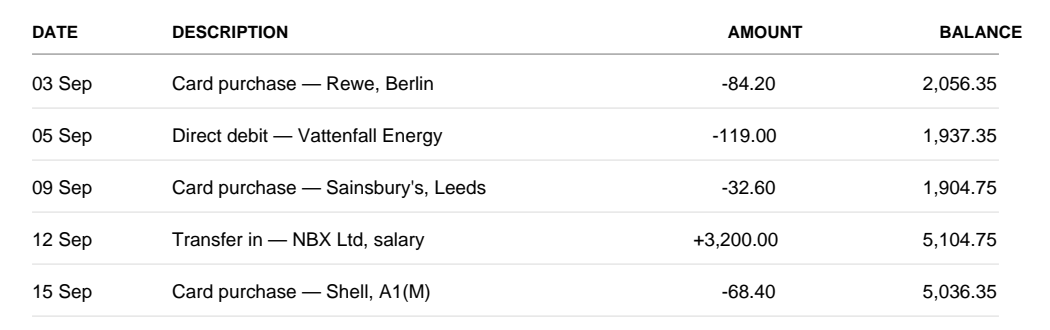
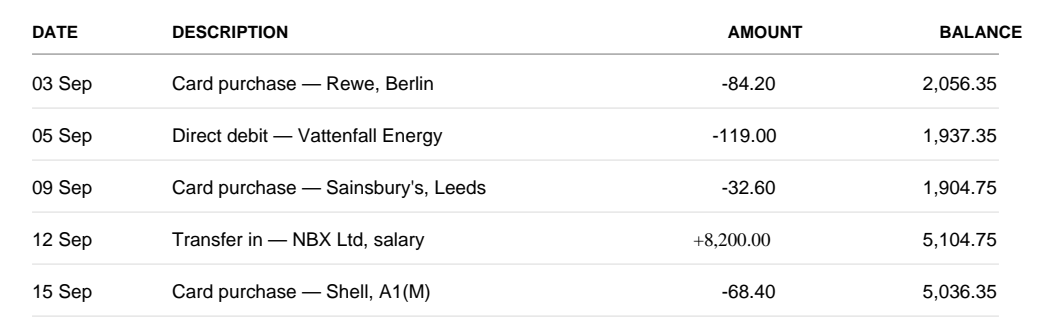
The salary line went from +3,200.00 to +8,200.00. The report names three traces in the file: that one amount is set in a different font from every other figure on the page, the file was modified three days after it was created, and its Producer field names Adobe Acrobat rather than the system that issued the statement. The running balance beside the edited line was never recalculated either.
Frequently asked questions.
How do lenders verify bank statements?
Two ways at once: they cross-check the story (income against deposits, employer against registries) and they examine the file itself — metadata, edit layers, balance arithmetic, fonts and the file's internal structure. The second part is document forensics, and it is what catches files edited after the bank issued them.
Can a bank statement be verified without contacting the bank?
Yes — and in practice it has to be, because banks do not discuss third-party accounts. The file itself carries the evidence: who generated it, when it changed, whether the numbers reconcile and whether anything was written over the original after it was issued.
How long does a verification take?
The automated analysis runs in about a minute after upload. The full report opens in your account the moment it finishes — there is no queue and no email to wait for.
Checking these documents inside your product?
The same check runs as a REST API for software that receives documents from its users: